
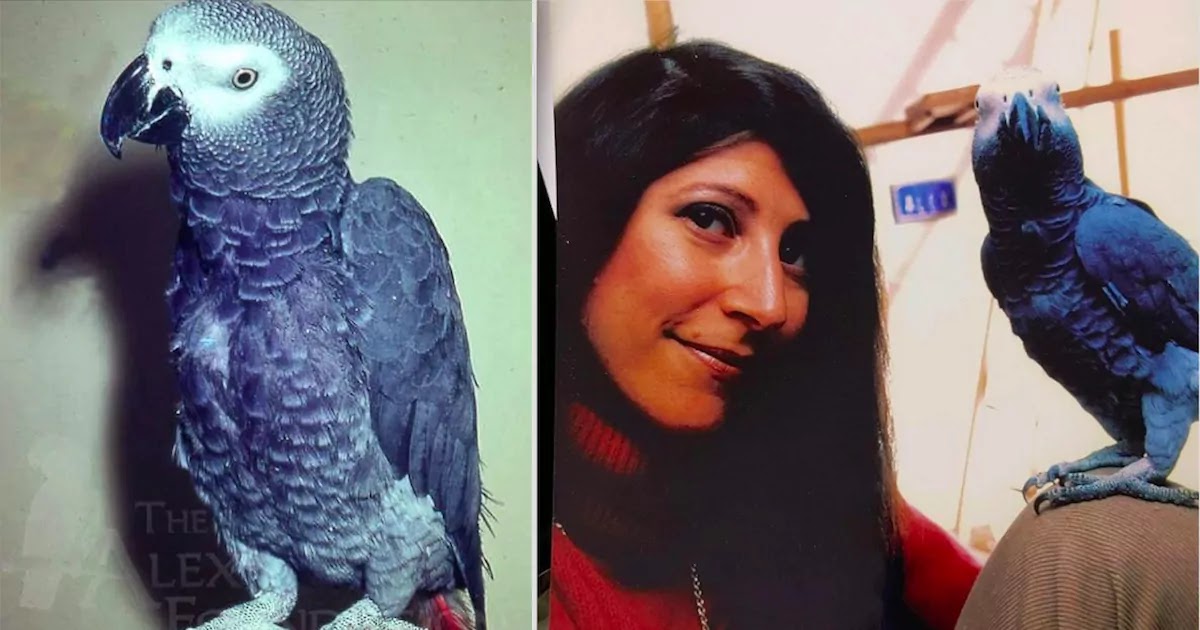
Alex, the African grey parrot who worked with Irene Pepperberg from 1977 until 2007, helped change the questions researchers asked about bird intelligence. His story involved three decades of teaching, interaction and experiments with objects, colors, materials and quantities. The memorable phrases and affectionate exchanges were part of that relationship, while the scientific significance came from tests of what he could apply beyond a memorized sound.
More than an impressive vocabulary
According to the Alex Foundation’s account, Alex learned more than 100 vocal labels and could identify objects by properties such as color and material. He worked with small quantities, made judgments about sameness and difference, and developed a zero-like response in particular experimental contexts.
Pepperberg began working with him in 1977. Alex died in 2007 at age 31, leaving a substantial research legacy rather than just a collection of entertaining recordings.
The distinction between a vocal label and a memorized sound is central. A useful test asks whether an animal can apply a response appropriately when the objects, combinations or question change. Correctly repeating a familiar phrase is not, on its own, the same accomplishment.
The model/rival method gave Alex a social example to observe. One human asked a question and another supplied a response, becoming both a model for the bird and a rival for attention. The people exchanged roles so the interaction did not always run in one direction. The 2021 account also described Alex practicing labels and later participating as a model when other parrots were trained.
The aim was to investigate categories and relationships rather than recognition of only one familiar object. A response about color or material had to apply to a new example, and labels for properties could be combined in different questions. Descriptions such as “What color?”, “What matter?” and “What shape?” refer to that experimental vocabulary; they should not all be recast as spontaneous philosophical questions asked by the bird.
The Alex Foundation records counting sets up to six, work on larger small quantities and a “zero-like” response in experimental contexts. Those achievements are more precise than ranking Alex above every dolphin or primate. Different species, tasks and training histories do not fit a single demonstrated smartest-animal league table.
What about the famous question?
A widely repeated story says Alex asked about his own color. It is often promoted as the first “existential question” asked by an animal. That sweeping label goes beyond what an anecdote can establish.
A question about a visible property, even a remarkable one, is not automatically evidence of philosophical reflection. And proving a historical first would require a much broader and more consistent record of animal communication than a viral headline suggests.
Alex’s documented achievements do not become less interesting when that claim is set aside. They become easier to discuss precisely.
The personal story also included a final goodbye. The 2021 account reported Alex saying to Pepperberg before his death: “You be good, see you tomorrow. I love you.” The words belong to the remembered relationship; they are not an experimental test of whether a bird understands each expression in exactly the same way a human does. The foundation’s continuing work provides a route into the research beyond that poignant anecdote.
How to watch a clever-animal clip
Listen for what the animal is being asked, not just what it says. Is the response correct for a new example? Can you see the complete exchange? Does the accompanying research explain training, unsuccessful trials and how cues from a human were controlled?
Those questions leave plenty of room for affection and surprise. They simply keep a charming moment connected to the evidence that gives it meaning.
Alex also reminds us that a much-loved individual cannot stand for every member of a species. His long history of interaction and training is part of his story.
For two very different experimental approaches, read about cuttlefish waiting for a preferred snack and a New Caledonian crow solving a tool puzzle. Comparing the questions being asked is more revealing than declaring one animal the smartest.
Video and posts
Credits and further reading: website.


COMMENTS