

The way cannabis enters the body changes almost everything about how it feels. Smoked or vaped cannabis acts within minutes because THC passes from the lungs straight into the blood. Eaten cannabis takes 30 minutes to 2 hours to kick in, lasts longer, and is processed by the liver into a different, potent compound. Smoking also exposes the lungs to many of the same toxins found in tobacco smoke. What none of these routes does, despite many online claims, is cure cancer.
The infographic further down compares the main methods side by side. Here we explain the science behind it, correct some popular myths, and set out what is and is not known about cannabis as medicine.
Why the route matters: lungs versus liver
Cannabis contains more than a hundred cannabinoids, of which the best known are THC (the main intoxicating compound) and CBD (which does not produce a "high"). In the raw plant most THC exists as an acid, THCA, which is not intoxicating. Heat converts it into active THC, a process called decarboxylation. That is why people heat cannabis before eating it, and why the old claim that heating "negates" its value gets things backwards: without heat, most of the THC never becomes active.
Once activated, THC can reach the brain in two main ways:
- Through the lungs. When cannabis is smoked or vaped, cannabinoids enter the bloodstream quickly. Effects begin within minutes and usually fade over a few hours.
- Through the gut and liver. When cannabis is eaten or drunk, THC passes through the liver first, where much of it is converted into 11-hydroxy-THC. According to the US National Cancer Institute, this is a different psychoactive chemical, and many users find it stronger and longer lasting.
Oils and tinctures held under the tongue sit somewhere in between: some cannabinoid is absorbed through the mouth and some is swallowed.
Smoking, vaping and edibles compared
Smoking. Joints, pipes, bongs and blunts all burn plant material. The effect is fast and easy to judge, but the smoke is the problem. The CDC says cannabis smoke harms lung tissue, can cause scarring and damages small blood vessels, whatever device is used. It contains many of the same toxins, irritants and carcinogens as tobacco smoke, and regular smokers have higher rates of bronchitis, cough and mucus. Those symptoms usually improve after people stop.
Vaping. Dry-herb vaporizers heat cannabis below the point of burning, so they produce fewer combustion by-products than smoke. Many people who want to avoid smoke choose one; if that is you, a vaporizer like this is the kind of device meant. Be aware that "less harmful" is not "harmless", and that illicit THC vape cartridges have been linked to serious lung injuries in the past. Stick to regulated products where cannabis is legal.
Edibles. Brownies, gummies, chocolates and drinks avoid the lungs entirely, which is their great advantage. Their great risk is timing. The CDC notes that edibles can take from 30 minutes to 2 hours to produce effects, so people often take a second dose before the first one arrives, then become far more intoxicated than they intended. Edibles that look like ordinary sweets are also a growing cause of poisoning in children.
Anytime you burn something and inhale it, whether wood, tobacco or cannabis, you breathe in fine particles and irritants. That simple fact, more than any detail of plant chemistry, is the best reason to prefer non-smoked methods.
The infographic
This chart was produced by MesotheliomaTreatmentCenters.org. It summarises how inhaled and ingested cannabis differ in onset, duration and typical uses. Read it as a quick overview: some of its medical claims are stronger than the evidence, as the sections below explain.
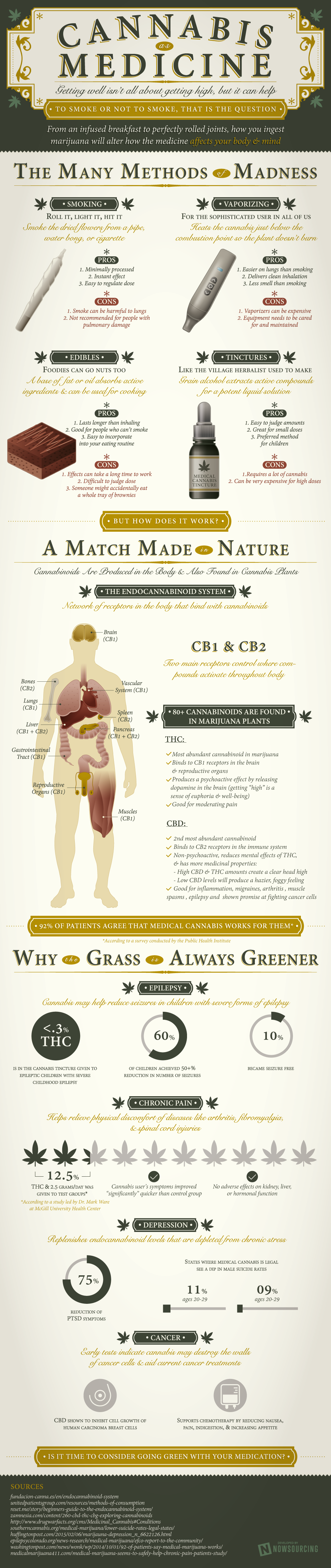
What cannabis medicine can and cannot do
A widely shared claim says that most of the plant's medical benefits, including an ability to fight cancer, come from eating it or taking oil. That claim does not hold up. The National Cancer Institute states that the FDA has not approved cannabis or cannabinoids as a cancer treatment. Some cannabinoids kill cancer cells in laboratory dishes and in animals, but that is a long way from curing cancer in people, and human studies so far are small and early.
There are, however, real and approved uses:
- Nausea and vomiting from chemotherapy. Two THC-based medicines, dronabinol and nabilone, are approved for patients whose nausea has not responded to standard drugs. Trials found them as good as or better than other options.
- Some types of pain. Results are mixed. Inhaled cannabis did better than placebo for nerve pain in some trials, but the drugs above are not approved for pain.
- Severe childhood epilepsies. A purified CBD medicine is approved in several countries for certain rare seizure disorders.
Evidence for treating anxiety, depression or stress is weak and inconsistent. Some people report feeling calmer, but cannabis can also trigger anxiety, paranoia and, in vulnerable people, psychosis. If you are thinking about cannabis for any health problem, talk to a doctor, partly because it can interact with other medicines.
Risks worth knowing
- The developing brain. Regular use in the teenage years is linked to problems with memory, attention and learning, and to a higher risk of mental health problems. The brain keeps developing into the mid-twenties.
- Dependence. Cannabis can be habit-forming. Stopping after heavy use can bring irritability, poor sleep and restlessness for a while.
- Driving. THC slows reactions and judgement. Do not drive after using it, and remember that edibles keep acting for hours.
- Pregnancy and breastfeeding. Health agencies advise avoiding cannabis during both.
- Accidental poisoning. Store edibles locked away from children and pets. In the US, the Poison Help line is 1-800-222-1222; elsewhere, use your local emergency number.
Common myths
"Smoking cannabis is harmless to the lungs." Not so. The long-term link with lung cancer is still being studied, but airway irritation and bronchitis are well documented.
"Natural means safe." Plants can be powerful drugs. Dose, strength and the person's health all matter, and modern products are often much stronger than those of past decades.
"Cannabis oil cures cancer." There is no reliable human evidence for this, and people have been harmed by delaying proven treatment.
"Edibles don't work for me." Often they simply have not started yet. Wait at least two hours before even thinking about more.
For a different angle on the same debate, the original publisher also ran a piece on the possible downsides of regular smoking.
Sources: National Cancer Institute: Cannabis and Cannabinoids (PDQ); CDC: Cannabis and lung health; CDC: Cannabis poisoning and edibles; infographic by MesotheliomaTreatmentCenters.org; first shared via Collective Evolution.
Related:- The ‘Gateway Drug’ Is Alcohol, Not Marijuana
- The Importance of Drinking Rather Than Smoking Cannabis
- The Top Five Special Interest Groups Lobbying To Keep Marijuana Illegal
- Hempcrete in Building Design: Claims to Examine Closely
- 5 Reasons The Most Dangerous Drug Is Not Illegal
- How To Clean Your Arteries With One Simple Fruit
- How To Detox Your Lungs After You Quit Smoking
- Natural Way To Clear Your Lungs Of Nicotine, Tar, And Nasty Tobacco Byproducts
- This Is What Happens To Lungs After Smoking 60 Cigarettes
- What Changes After Someone Stops Smoking?
- An Anti-Smoking Advertisement Turns Adults’ Advice Back on Them
- If You Drink Alcohol On A Regular Basis, You Need To Read This Immediately
- 7 Things I Learned From A Year Without Alcohol
- Five Foods and Common Liver-Cleansing Claims


What a post
ReplyDelete