
A spiral of yellow leaves can make a patch of autumn ground feel newly visible. A careful arrangement of sticks can turn a patch of ground into a small event. James Brunt’s land art works with familiar materials and changes how we notice them.
Based in Yorkshire, England, Brunt creates temporary arrangements using found leaves, stones and other natural materials. The finished photographs are striking, but the work also invites attention to the time spent looking, choosing and placing.
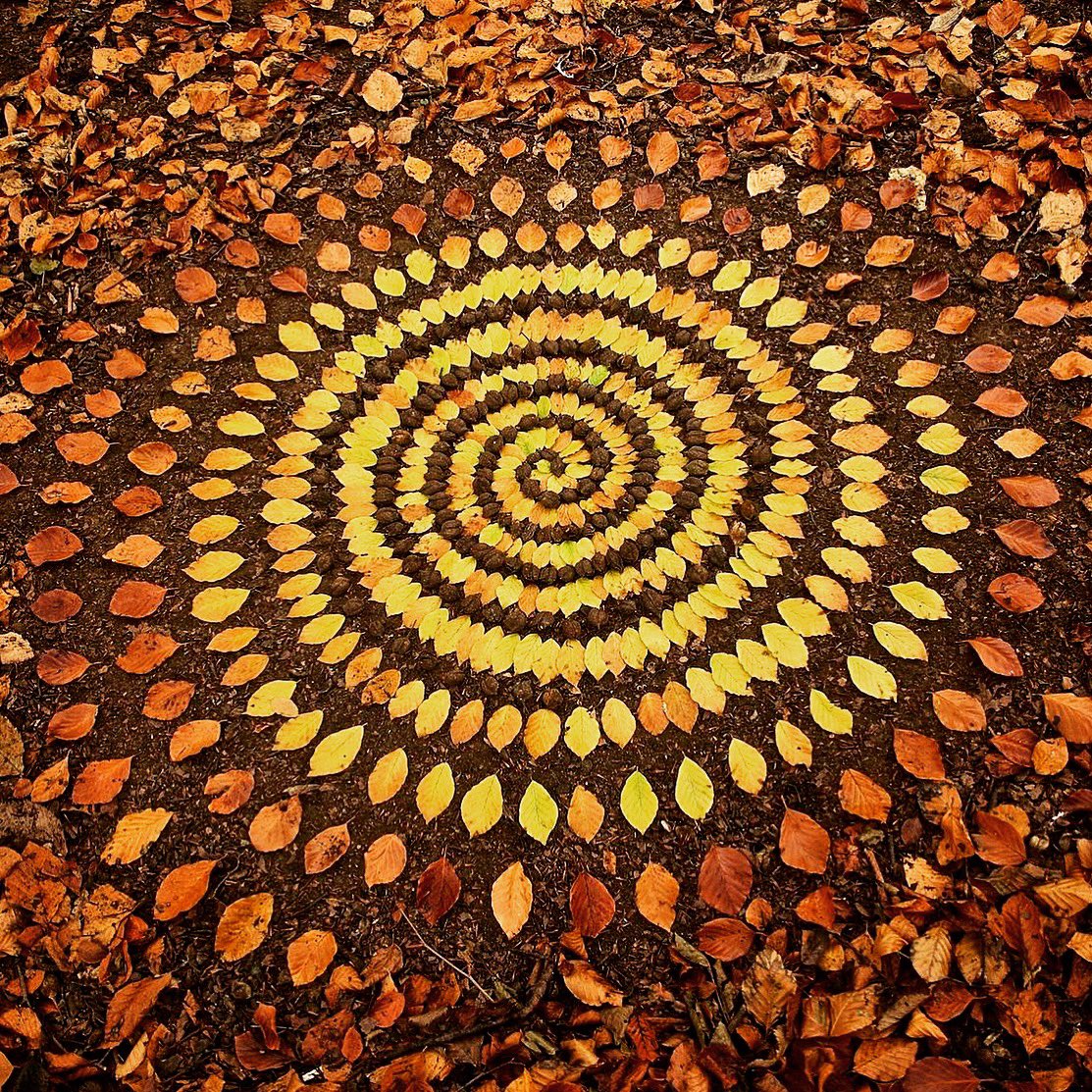
A pattern can grow out of the place
In an interview about nature and geometry, Brunt describes a process that responds to the materials and circumstances around him. The arrangement need not begin with a completely fixed design.
That flexibility is visible in the finished work. Differences in size, colour and shape become part of the pattern instead of being erased. Repetition gives the eye a route through the irregularity.
The result can feel unusually calm: a simple organising idea, expressed through objects that still look like themselves.
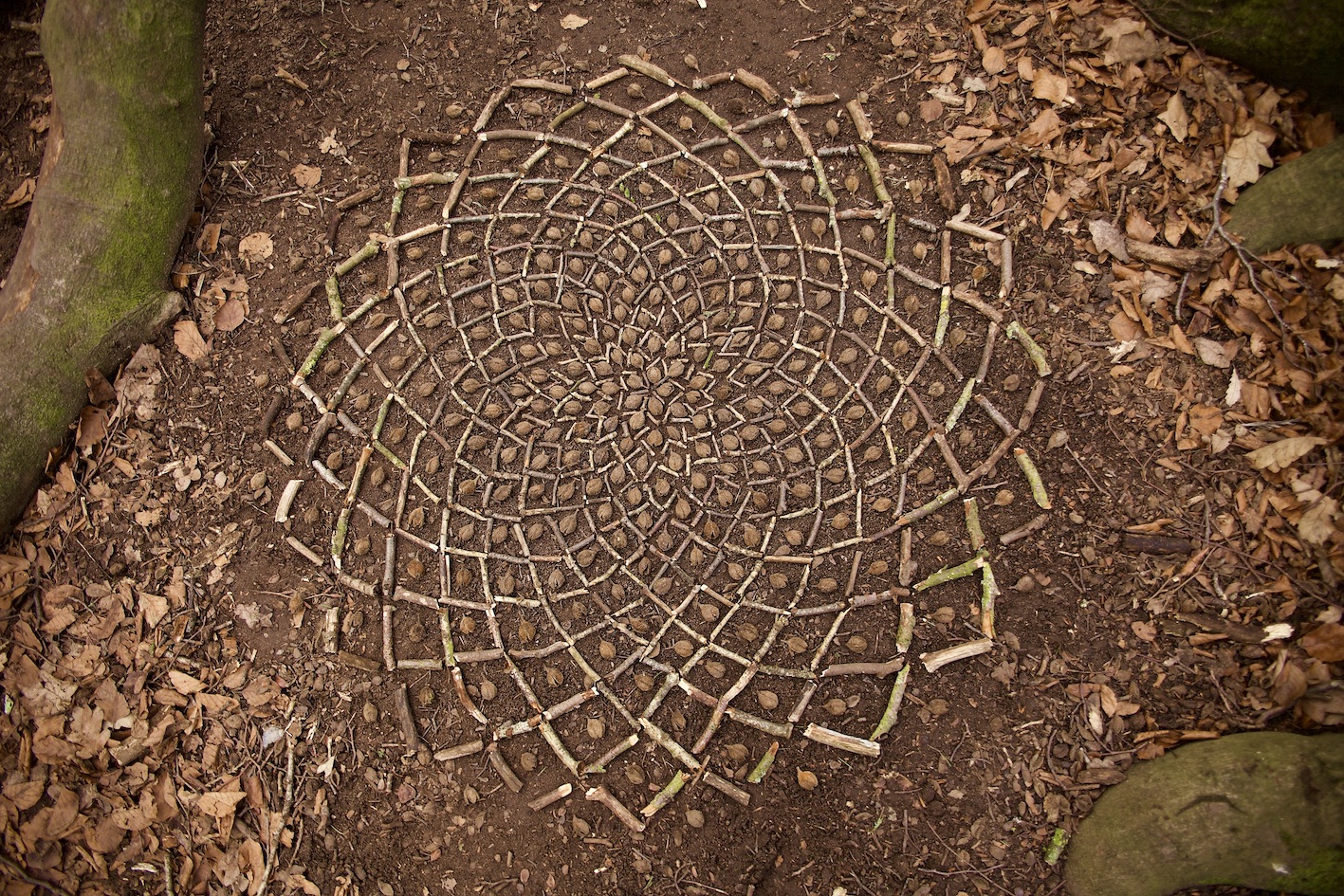
The photograph holds one moment
Temporary outdoor art has a relationship with change built into it. The photographed arrangement records a particular stage; it does not promise that the place will look the same for the next visitor.
Spend a moment comparing the artwork with its surroundings. Which colours were already present? Does a circle echo the tree’s base, or does a line draw attention towards a part of the ground you might otherwise overlook?
These questions help the image become more than a beautiful pattern saved to a collection. They let you see the choices that make it belong to its setting.
A small exercise you can try thoughtfully
In your own garden or another place where you have permission, choose a handful of already fallen leaves. Arrange them on a tray or clear surface by colour, then by size. Photograph both versions and compare the effect.
Keeping the exercise small makes it easier to focus on composition without disturbing a habitat. Leave living plants, lichens, nests and streambed stones in place. Found material can still provide shelter or food, so “natural” does not automatically mean impact-free.
You can also do the exercise without moving anything: photograph an existing patch of leaves from several angles and see which frame reveals the strongest pattern.
Art can make an everyday setting newly playful
Juho Könkkölä’s paper samurai demonstrates another kind of patient material attention, while Megx’s painted LEGO-style bridge brings a burst of playfulness to urban infrastructure.
Brunt’s work offers a quieter invitation. On the next walk, notice the material underfoot before thinking about making anything from it. Sometimes the most satisfying discovery is a colour sequence or natural shape that was there all along.
A different approach to temporary landscape art appears in Simon Beck’s geometric snow drawings. Instead of arranging found objects, Beck builds a pattern from repeated footsteps across an open surface.
More images from the 2019 feature


The spaces matter as much as the leaves
One useful way to explore Brunt's arrangements is to follow a single interval: the gap between neighboring leaves, or the distance from one ring to the next. Repetition makes those gaps part of the drawing. Change the interval and the same materials can suggest a tighter cluster or a more expansive movement.
Color provides a second route through the work. A gradual sequence invites the eye to travel; a sudden change can mark a boundary. These are compositional choices, not simply the result of finding attractive leaves. Compare two photographs for their spacing before comparing their colors, and the organizing decisions become much easier to notice.
Continue with a related feature: Rice-Paddy Art: Fields Designed as Large Living Pictures.


COMMENTS