

It was just one small step for a man, but a giant leap for humanity. On July 20, 1969, in U.S. time zones (July 21 UTC), Armstrong put his left foot on the Moon and created the first human footprint there. However, a claim circulated online, suggesting Armstrong did not even wear the boots, required to take this step.
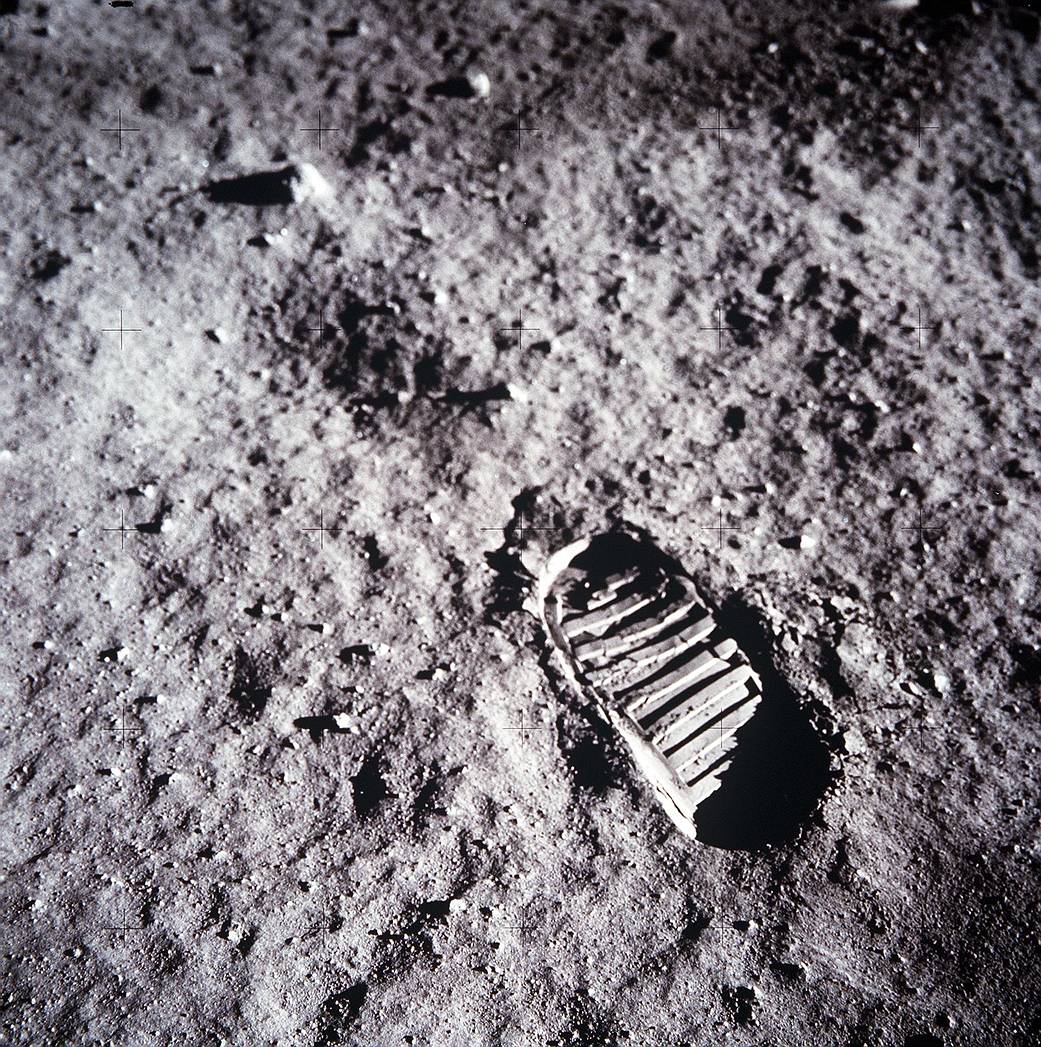
To support the claim, some posts compared a photograph of Neil Armstrong’s Apollo 11 spacesuit (captured in 2015 by astronomer Phil Plait at the Smithsonian’s National Air and Space Museum) with a shot from the mission itself.


While Neil Armstrong and the other crew members wore the Apollo/Skylab A7L suit pictured above, they had more gear, particularly overshoes with treaded soles. For the record, the footprint in the other photo is not even Armstrong’s. It belongs to Buzz Aldrin, according to NASA.


The overshoes provided extra protection from tears, rips, and dust to the basic spacesuits. They left distinctive footprints which can be seen in numerous other photos from the mission. If you still feel skeptical, go to the Moon for a closer look. NASA used the phrase “the first footprints on the Moon will be there for a million years. There is no wind to blow them away.” to explain their potential longevity. This is an illustrative estimate, not an exact survival guarantee: impacts and other surface disturbances can alter lunar traces. [source]


The question we need to address next is why the overshoes are not at the museum like the rest of Armstrong’s gear. The Apollo 11 crew left behind about 100 items on the Moon as a weight saving measure. The list includes TV lenses and bodily fluids, as well as the infamous shoes.
However, Neil Armstrong claimed the most significant accomplishment of the mission wasn't taking the steps but actually landing the lunar module: “Pilots take no special joy in walking: pilots like flying,” he said. “Pilots generally take pride in a good landing, not in getting out of the vehicle.”


Responses to the circulating image comparison


(The Facebook video originally embedded here is no longer available.)
Different layers, different soles
The Apollo 11 press kit lists the removable lunar overshoes separately from the spacesuit and describes procedures for taking off the surface boots before return. Comparing only the underlying footwear with a surface print therefore compares the wrong objects.
This is a common problem with persuasive image pairs: both photographs can be authentic while the implied relationship between them is wrong. The missing context may be a removable layer, a different date or a different piece of equipment.
Whose bootprint is in the famous image?
NASA identifies this photograph as Buzz Aldrin’s bootprint, recorded during Apollo 11. It should not automatically be labeled Neil Armstrong’s first step just because Armstrong was the first person to walk on the Moon.
The distinction is straightforward once the image is connected with its original caption. A later social-media label is not a replacement for the mission record.
How to check an image comparison
Find the earliest reliable source for each photograph. Identify the person or object, read the caption and check whether the items are being compared in the same configuration. Then look for the relevant equipment documentation.
Our guide to Apollo image archives offers a broader route into the mission photographs. For another example of a misleading space-image caption, see the real story behind the crashed Genesis capsule.
Compare the equipment used for the same task
The misleading comparison becomes clearer once the separate footwear components are identified. An image of an inner suit boot and a print made by an outer lunar boot are not a like-for-like pair. This is a useful general habit when examining photographic claims: establish what each image actually depicts before explaining an apparent contradiction between them.


GTFO with your spam.
ReplyDelete