


A drawing of five feet, labelled Egyptian, Roman, Greek, Germanic and Celtic, has been doing the rounds on social media for more than a decade. It asks a simple question: based on the shape of your toes, where do your roots lie?
The honest answer is that your toes cannot tell you. No genetic or anthropological study links these five toe patterns to the peoples named on the chart. The shapes themselves are real and easy to spot on your own feet, but the ethnic labels attached to them are a modern invention, not a finding. Here is where the chart comes from, what the shapes actually describe, and what really decides how your feet look.
The short answer: toe shape is not an ancestry test
Ancestry is written in DNA, and modern ancestry testing works by comparing many thousands of genetic markers with reference groups. Foot shape is influenced by genes, but it is also shaped by growth, injuries, footwear and age, and it varies widely inside every family and every population.
Even the websites that promote the chart give it away. A 2014 post on the MyHeritage blog presented the five types with confident-sounding percentages for Europe, yet offered no study behind them, and many readers in the comments reported results that clashed with their documented family history. People with the same parents often have different toe patterns, which would be impossible if each pattern marked a separate lineage.
Where the five-feet chart comes from
The idea is usually traced to reflexology and popular "foot reading" books, rather than to anatomy or genetics. The MyHeritage post credits reflexologists and the book The Language of the Feet by Imre Somogyi. Reflexology itself is a complementary therapy without good evidence that the feet map onto the rest of the body, so it is a weak foundation for claims about history.
The chart then spread through image sharing sites and viral blogs around 2013 and 2014, often with the caption "What are your roots?". Each copy repeated the labels, and repetition made them feel like settled knowledge.
What the five shapes actually describe
Set the labels aside and the chart is a reasonable sketch of common toe patterns:
- "Egyptian": the big toe is the longest and the others step down at an angle. This is a very common pattern.
- "Roman": the first two or three toes are roughly the same length, giving a squarer front.
- "Greek": the second toe is longer than the big toe.
- "Germanic": a large big toe with the four smaller toes nearly equal.
- "Celtic": an uneven pattern, usually with a long second toe and a short big toe.
Only one of these has a medical name. A second toe that looks longer than the big toe is called Morton's toe, or the Greek toe. It usually happens because the first metatarsal, the long bone behind the big toe, is shorter than the second. Published estimates of how common it is range from about 3% to 22% depending on the population studied, and one Nigerian study found it in almost a third of Idoma people. That spread alone shows the "Greek" foot is not a Greek trait.
Why the labels do not work
The "Greek" name comes from art, not from Greek people. Classical sculptors often carved the second toe longer as an ideal of beauty, and that convention carried on through Roman, Renaissance and neoclassical art. The Statue of Liberty has toes in the same proportion. A style of sculpture is not a population.
The other labels have no such story behind them. Ancient Egyptians, Romans, Germanic tribes and Celts were not separate breeding groups with fixed body types. People moved, traded, married and mixed for thousands of years, so any trait found among Romans was also found among their neighbours. Some versions of the chart add that people with a "pure" lineage show one shape clearly, which repeats an old and discredited idea of racial purity rather than anything known about human populations.
What really shapes your feet
The length of each toe depends mostly on the length of the bones behind it, and bone growth is influenced by many genes rather than one "ancestry gene". Growth plates can close at slightly different times, which is why toe proportions can differ between siblings and even between your own left and right foot.
Life adds the rest. Tight or pointed shoes, high heels, bunions, hammertoes, injuries and surgery all change how the toes line up. A foot photographed at twenty may not match the same foot at sixty. That is another reason a single drawing cannot sort people into ancient peoples.
Toe shape can matter for comfort, though. People with Morton's toe sometimes get calluses or pain under the second toe, and shoes that are too short or narrow can make it worse. If your feet hurt, a doctor or podiatrist can help; most people with any of these five shapes never need treatment.
Better ways to explore your roots
If the chart made you curious about where your family came from, there are tools that actually measure it. Family records, parish registers, census and migration archives remain the backbone of genealogy. DNA tests can add useful clues, especially for finding relatives, but their ethnicity estimates are approximations that change as reference databases grow.
The foot chart is best treated as a party game: fun to compare with friends, but no more a guide to ancestry than a horoscope is a guide to personality.
Sources: MyHeritage blog: Discovering ancestry through our toes?; Wikipedia: Morton's toe; Banoosh (where the chart circulated in 2014).
Related:- Composite Faces Labelled by Country: What an Average Image Represents
- This is What Americans Will Look like by 2050 – and it’s Stunning
- The 63 Most Powerful Photos Ever Taken That Perfectly Capture The Human Experience
- Portraits From Around the World: People and Photographic Perspectives
- 16 Children & Their Bedrooms From Around the World…
- Stunning Time Lapse Map Video Shows 1000 Years Of Europe's History In 3 Minutes


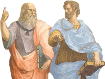
Left: Greek, right: Egyptian ???
ReplyDelete