
Originally published 2022-06-28.
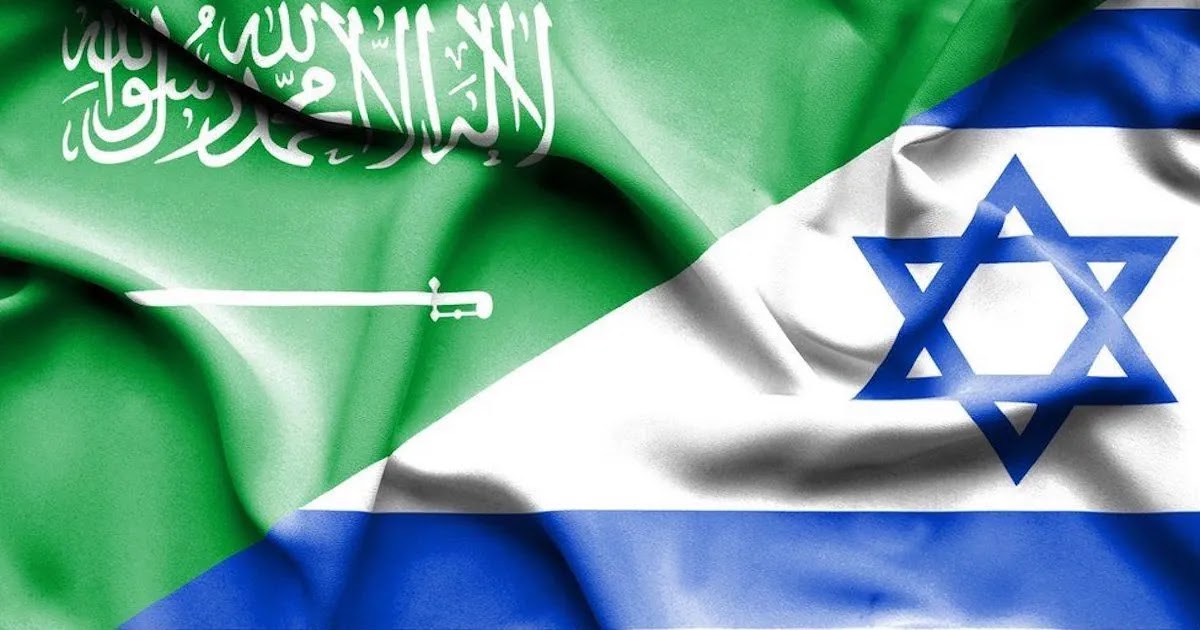
In June 2022 The Wall Street Journal reported that the United States had quietly brought together the top military officers of Israel, Saudi Arabia and several other Arab states to plan joint defence against Iranian drones and missiles. No formal defence pact was signed. What the officers reportedly agreed was more modest but still striking: a way to share warnings of incoming air attacks in real time.
The secret meeting at Sharm el-Sheikh
According to the Journal’s sources, the talks took place in March 2022 at the Egyptian Red Sea resort of Sharm el-Sheikh and were convened by US Central Command. Israel was represented by its chief of staff, Aviv Kochavi, and Saudi Arabia by its chief of general staff, Fayyad al-Ruwaili. Senior officers from Qatar, Egypt, Jordan, the United Arab Emirates and Bahrain also attended.
It was described as the first meeting of its kind. The participants reportedly agreed in principle on procedures for passing on warnings of threats by phone and computer links, a first step that would need approval from their governments before going further.
Most governments declined to comment. The head of Central Command did not confirm the meeting, but said Washington was working to deepen cooperation in the region and called Iran the main threat to its stability.
Why Iran’s drones and missiles drove the talks
Iran has built one of the largest missile and drone arsenals in the Middle East. Its weapons, or copies supplied to allied groups, had already hit Saudi oil facilities, most dramatically at Abqaiq and Khurais in September 2019, and had been fired at the UAE by Yemen’s Houthi movement in early 2022.
No single country can easily defend against swarms of cheap drones and cruise missiles flying low across borders. Radar coverage from neighbours buys valuable minutes. That practical problem, rather than any change of heart, is what pushed old rivals toward sharing information. Israeli defence minister Benny Gantz said in June 2022 that a regional air defence arrangement was already working and had helped stop Iranian attempts to strike Israel.
What changed with the Abraham Accords
For decades, open military cooperation between Israel and Gulf states was politically unthinkable. Most Arab states refused to recognise Israel until a Palestinian state was created.
That began to shift in 2020. On 15 September 2020 the UAE and Bahrain signed the US-brokered Abraham Accords at the White House, establishing full relations with Israel. Morocco followed in December 2020, and Sudan signed the accords declaration in January 2021. Egypt and Jordan already had peace treaties with Israel from 1979 and 1994.
Saudi Arabia did not join. The kingdom, home to Islam’s two holiest sites, has kept its long-standing position that normalisation depends on progress toward a Palestinian state. Talks on a Saudi–Israeli deal continued in 2022 and 2023, but nothing was signed.
Rivalry with Iran: religion and power
Saudi Arabia and Iran are often described as Sunni and Shia rivals, and religion does shape their identities. Most analysts, though, see the contest mainly as a struggle for regional influence. The two have backed opposite sides in Syria, Lebanon, Iraq and above all Yemen, where Saudi Arabia leads a coalition supporting the government and Iran backs the Houthis.
Saudi Arabia cut diplomatic ties with Iran in January 2016, after its embassy in Tehran was stormed following the execution of the Shia cleric Nimr al-Nimr.
Denials and doubts
Not everyone accepted the idea of an anti-Iran alliance. Within days of the report, Jordan’s foreign minister Ayman Safadi told Al Jazeera that no military coalition including Israel was being discussed and that it was not on the agenda for President Joe Biden’s upcoming visit. Reports from Egypt also suggested parts of its security establishment opposed a regional bloc against Tehran.
Public opinion was another obstacle. Many people in Arab countries continue to see Israel as an occupying power because of its treatment of Palestinians, and governments are careful not to be seen forming an alliance with it.
Biden toured the region from 13 to 16 July 2022, visiting Israel, the West Bank and Saudi Arabia. He flew directly from Israel to Jeddah, a symbolic first, but no defence pact was announced.
What happened next
Events since 2022 have both tested and reshaped the idea. On 10 March 2023, in a deal brokered by China, Saudi Arabia and Iran agreed to restore diplomatic relations, and both embassies reopened later that year. Riyadh signalled it wanted calm with Tehran, not confrontation.
Then came the Hamas attack on Israel on 7 October 2023 and the war in Gaza, which froze Saudi normalisation talks and strained ties between Israel and its Arab partners.
Yet the air-defence logic held. When Iran launched more than 300 drones and missiles at Israel on 13–14 April 2024, the attack was largely intercepted by Israel with help from the United States, the United Kingdom, France and Jordan, whose jets shot down drones over its own territory. The Wall Street Journal reported that Saudi Arabia and the UAE had shared intelligence and radar data beforehand. The quiet warning network discussed at Sharm el-Sheikh had, in effect, been put to the test.
Further Iranian and Israeli exchanges of fire in October 2024 and June 2025 kept the question alive, while Gulf states continued to stress that they did not want to be a launch pad for anyone’s war.
The lesson is that formal alliances remain politically out of reach, but practical, low-profile cooperation on shared threats has grown. That gap between public positions and private coordination is likely to define the region for years.
Sources: Ynet, 26 June 2022: Israel takes part in secret US talks on Iran, WSJ reports; Israel Hayom, 29 June 2022: Jordan says Israel–Arab military alliance not on the table; The Guardian, 27 June 2022; Wikipedia: Abraham Accords; Wikipedia: Iran–Saudi Arabia relations; Wikipedia: April 2024 Iranian strikes against Israel.


COMMENTS