
On January 27, 2021, New York’s Central Park received a visitor that persuaded plenty of people to look up from their usual routines: a snowy owl in the North Meadow.
The pale bird, more readily associated with Arctic landscapes than a Manhattan park, became a small shared event in a very large city. For birdwatchers, it was also an opportunity to connect a remarkable sighting with an older entry in the local record.
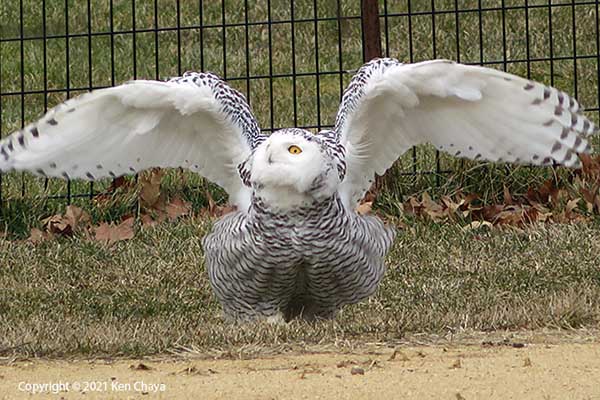
Where the “130 years” came from
The Linnaean Society of New York’s account confirmed the 2021 appearance and reproduced an archival note of a snowy owl seen in the park in December 1890.
That is the basis for the widely repeated comparison with roughly 130 years earlier. The careful way to express it is as a gap between documented park records, rather than proof that no snowy owl could have passed through unnoticed in all the intervening years.
Records matter because they preserve the details that a memorable story can otherwise lose: a date, a location and an identifiable observation.
The observers who shared the Central Park visitor
David Barrett’s Manhattan Bird Alert account helped bring the January 2021 sighting to a wider audience. The posts below show the bird on the ground in the North Meadow and preserve the observers’ dates and credits. RosEspinosa Quinto also shared an image with thanks to other local birdwatchers.
Barrett suggested that snow and cold farther north might have encouraged movement and that the open, sand-filled playing fields could have appealed to the owl. That was an observer’s proposed explanation, not a tracked route or a diagnosis of the bird’s condition. A bird sitting quietly is not enough to establish that a surrounding crowd causes no stress. The 2021 pandemic/air-traffic speculation likewise should not be mistaken for a tested cause of the visit.
Why a snowy owl might appear farther south
Snowy owls breed in the Arctic, where they can hunt during the long summer daylight. In winter, some remain far north while others move into Canada and the northern United States. Their appearance farther south varies among places and years.
The Cornell Lab of Ornithology’s species guide describes their use of open areas such as fields, dunes and shorelines. A broad, open space in a city can therefore be more relevant to an owl than the surrounding street map suggests.
A southern sighting does not, by itself, tell us that an owl is lost or starving. The condition and circumstances of the individual require actual observation.
Snowy owls are substantial birds: Cornell’s reference measurements give a length of 52–71 centimeters and a mass of about 1.6–2.95 kilograms. These describe the species, not a weighing of the Central Park visitor. Their diet often centers on lemmings and other small mammals, but can also include birds such as ptarmigan, ducks and other waterfowl. Local prey availability helps explain why an owl may use different open landscapes.
What makes the bird recognisable?
Look for the large, rounded shape, yellow eyes and pale plumage marked with varying amounts of dark barring. Snowy owls do not all look equally white, and a single photograph is not always enough to confidently determine an individual’s age or sex.
Nor are they confined to nocturnal activity. An Arctic summer demands a different relationship with daylight from the one suggested by the familiar image of an owl hunting only after dark.
How a crowd can keep a rare visit enjoyable
Stay back, keep paths clear and resist the urge to make the bird fly for a more dramatic photograph. Avoid baiting and repeated approaches. The American Birding Association’s ethics guidance puts the bird’s welfare and respect for other people at the centre of a good encounter.
For a very different bird-watching pleasure, explore Christian Spencer’s backlit hummingbird photographs. Whether the subject is tiny and fast or large and still, patient observation often gives the most rewarding view.
Central Park’s snowy owl offered a lovely reminder that even a much-visited place can surprise us. The best response is to make room for the visitor as well as the people delighted to see it.
The January 2021 Central Park observations
The posts retain the observers’ photographs, credits and dates. Suggested explanations for the owl’s visit are identified as the observers’ interpretations.
Yesterday's SNOWY OWL in the Central Park North Meadow, a once-in-a-lifetime sight. pic.twitter.com/SaCpWJbAIX
— Manhattan Bird Alert (@BirdCentralPark) January 28, 2021
Yesterday's snow and cold to our north likely encouraged this SNOWY OWL to fly south in search of better hunting conditions. These owls like flat lands and beaches, so the Central Park North Meadow, flat and with sand-filled fields, might have appealed.
— Manhattan Bird Alert (@BirdCentralPark) January 27, 2021
Snowy Owl was the center of attention today in Central Park and ready to play ball.. ⚾️ Thanks @BirdCentralPark for the alerts. #birdcp #WildlifeWednesday #birding Big thanks @gigi_nyc for messaging me and @VenusNabs pic.twitter.com/p42QG7ve1d
— RosEspinosa Quinto (@mitzgami) January 28, 2021
More images from the 2021 feature

Sources, credits and background: Good News Network report.


COMMENTS