

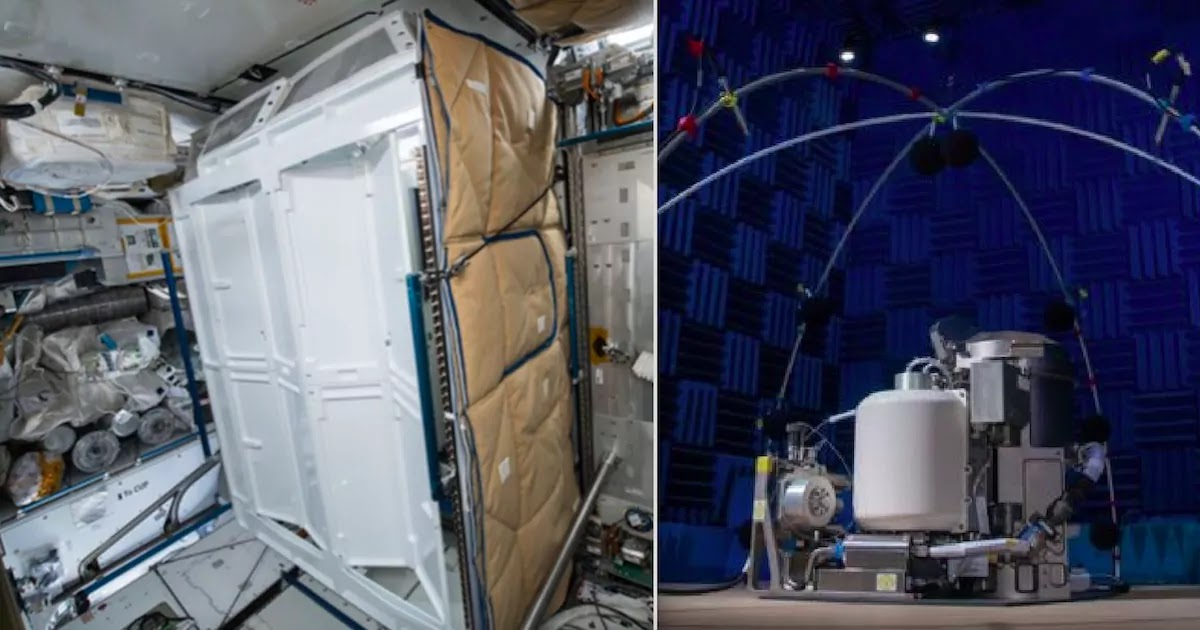
Separate views of spaceflight bathroom equipment from the 2020 NASA-related report. Source.
In 2020, NASA prepared to test a new toilet system, developed at a reported cost of $23 million, on the International Space Station (ISS). The multimillion-dollar toilet system is based on a 'vacuum system' that uses airflow to carry waste away after it leaves the body.
The toilet, known as the Universal Waste Management System (UWMS), was being prepared for the October 2020 cargo launch to the ISS; the 2020 report followed a launch delay.
Waste management is a seriously difficult issue for space travel because orbiting crews experience microgravity. This particular system, with all the technology it is equipped with, weighs less than traditional models, but still comes in at around 45kg (100lbs).
Space toilets work by using air-flow to pull human waste, number 1 and number 2, away from the individual using it. Much like a vacuum cleaner sucks dirt from the ground and into a receptacle, the new space toilet works in much the same way.
Collected urine can feed a separate water-recovery system that processes it into clean drinking water; the toilet itself does not perform all the purification. In the 2020 description, solid waste was collected separately rather than recycled through the urine-water recovery process. Maybe this would however take a bit of the shine off becoming an astronaut.
If you've ever wondered how astronauts use the bathroom in space –– today’s your day.
— NASA (@NASA) October 1, 2020
In this NEW #AskNASA episode, @Astro_Jessica answers some of our most popular ❓s about living on the @Space_Station & sneak peeks a new space toilet launching tonight: https://t.co/ysiPNyfrfP pic.twitter.com/jRp1ucH7DO
NASA said in a statement about the toilet:
"The UWMS seat may look uncomfortably small and pointy, but in microgravity it's ideal. It provides ideal body contact to make sure everything goes where it should."
Melissa McKinley, a Nasa project manager, told the BBC:
"[A] big part of our project was optimising the use of the toilet for the female crew. Nasa spent a lot of time working with the crew members and doing evaluations to improve the use of the commode seat and the urine funnel to make it more accommodating to use by female crew members. Cleaning up a mess is a big deal. We don't want any misses or escapes."
The 2020 project aimed to demonstrate that the toilet would work as expected on the International Space Station and that it will be adopted in more space operations going forward.
Airflow does the directing
NASA’s explanation of the Universal Waste Management System, or UWMS, describes separate arrangements for urine and solid waste. A funnel and hose collect urine; solid waste goes into its own receptacle. Handholds and foot restraints help astronauts remain positioned in microgravity.
This is not simply a household toilet with a stronger flush. Air management, containment and maintenance all have to suit a small shared spacecraft. Equipment must work for the people using it, including differences in anatomy and the practicalities of clothing and cleaning.
Where water recycling fits in
On a spacecraft equipped for recovery, collected urine can feed into a separate treatment system that reclaims water. The toilet itself does not instantly turn waste into drinking water. Collection and purification are different steps, with different engineering requirements.
NASA’s 2020 introduction described UWMS as 65% smaller and 40% lighter than the station toilet used for that comparison. Those figures refer to a particular design comparison at that time, rather than every toilet ever flown.
Why comfort is a mission requirement
A device used several times a day can create a large burden if it is awkward or slow to maintain. Better positioning, manageable cleaning and reliable waste containment free up crew time and make a confined habitat easier to share.
It is the less glamorous companion to milestones such as the first all-woman spacewalk. Space exploration depends on both: ambitious work outside the station and well-designed daily life inside it.
Additional source and image references: Space-station toilet compartment beside waste-management equipment


COMMENTS