
A low rumble from Mars made a distant world feel suddenly more familiar. In December 2018, NASA shared recordings derived from wind detected by the newly landed InSight spacecraft. The sound was an unexpected bonus from instruments built for careful measurement.
It is still a lovely listening experience. Understanding how the recording was made adds another layer: the spacecraft was sensing movement in ways quite different from a person holding up a microphone.
An unplanned result, in the investigator’s words
As InSight principal investigator, Bruce Banerdt said: “Capturing this audio was an unplanned treat. But one of the things our mission is dedicated to is measuring motion on Mars, and naturally, that includes motion caused by sound waves.”
The 2018 report dated the landing to November 26, 2018, and described the December 1 wind as roughly 10–15 mph (16–24 km/h), based on NASA’s estimate. The recordings were connected with wind-driven motion of the lander and atmospheric-pressure changes.
The 2018 feature also looked ahead to microphones on the mission then called Mars 2020. That was a future plan in the 2018 report, not a promise of an upcoming launch today. The NASA-related posts preserve how the sound was first shared, while the explanation here distinguishes instrument data and processed audio from a direct microphone recording.
NASA also reported that the estimated wind direction agreed with dust-devil streaks identified from orbit. That comparison connected the lander’s local measurements with a larger view of its surroundings.
Two instruments, two routes to the wind
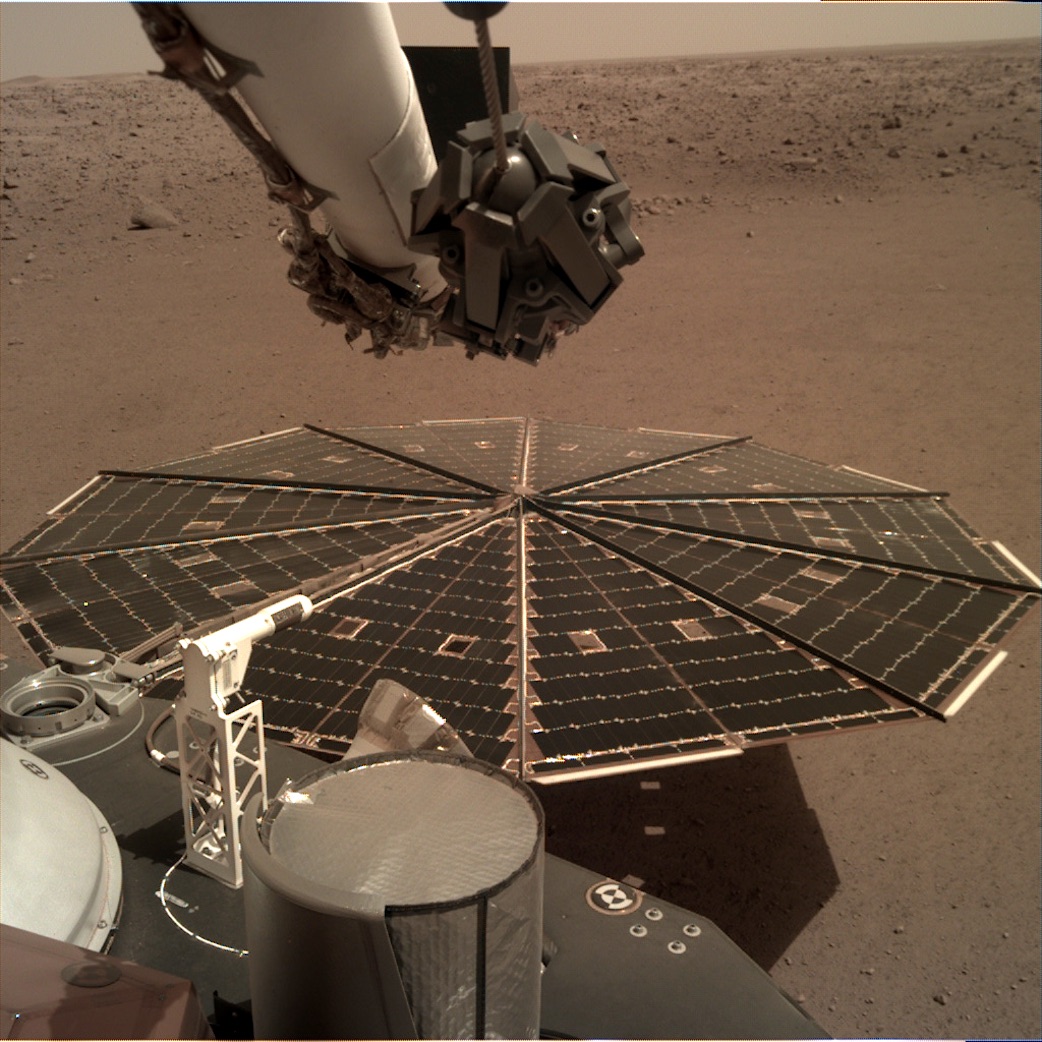
According to NASA’s original release and audio explanation, InSight detected the wind on December 1, 2018. A pressure sensor measured changes in the thin Martian air, while a seismometer still on the lander’s deck detected vibrations of the spacecraft.
The solar panels responded to the wind, transferring motion through the lander. The seismometer could pick up those vibrations before it was placed on the ground and covered by a protective shield.
Both measurements were connected to the wind, but they were not identical recordings made by the same kind of sensor. That matters when clips circulate without their original captions.
Why some versions sound different
NASA released an unaltered seismometer sample and a version shifted upward by two octaves to make the low-frequency signal easier to hear on ordinary speakers. The pressure-sensor sample was sped up by a factor of 100, also moving its frequencies into a more audible range.
Those processing choices were disclosed. They help listeners experience data that would otherwise be difficult to hear; they should not be mistaken for exactly what an unaided human ear would have heard beside the spacecraft.
When opening the official audio, read which version you have selected. Headphones can make the quieter details more apparent, but a comfortable volume is enough—the interest is in the texture, not the loudness.
InSight’s main task was beneath the surface
The mission was designed to study the interior of Mars, using measurements including seismic waves. Wind was scientifically relevant in part because it could introduce motion that researchers needed to distinguish from signals originating within the planet.
That makes the recording a useful example of how one measurement can have two audiences. For researchers it helps characterise the instrument’s environment; for the rest of us it provides an evocative connection with another world.
The mission ended, but its data remain useful
NASA announced the end of InSight’s mission in December 2022, after dust accumulation reduced the energy available from its solar panels and contact was lost. The recordings are historical mission material, not a live feed from an operating lander.
Mars exploration continued through other missions. For another view of the planet, explore Perseverance’s early panoramic images or Ingenuity’s completed helicopter mission.
InSight’s rumble is a reminder that exploration is not only about spectacular panoramas. Sometimes a carefully explained vibration can make a place millions of kilometres away feel a little more real.
More images from the 2018 feature


NASA's new spacecraft, the Interior Exploration using Seismic Investigations, Geodesy and Heat Transport (‘InSight’) recently landed on Mars. © NASA
Video and posts
Posts and process videos
BREAKING: Humans have never before heard the sound of wind on Mars until now! Listen to #SoundsOfMars as recorded by @NASAInSight as Martian winds swept over our lander. Best with headphones or a subwoofer. https://t.co/VreQxcAnAM pic.twitter.com/yd98NgZgR3
— Jim Bridenstine (@JimBridenstine) December 7, 2018
This is historic. It's the first time anyone has ever heard a sound on Mars.@NASAJPL just released audio of wind blowing across the Martian landscape, captured by the Mars Lander's audio sensors.
— Muhammad Lila (@MuhammadLila) December 7, 2018
This is what it sounds like.
(Turn your speakers up) pic.twitter.com/wJPUUAUPCW


COMMENTS