
An elephant’s tusks are useful tools. They can help with digging, stripping bark and moving objects. During intense ivory poaching, however, the same conspicuous feature can make an elephant a target.
That tragic change in circumstances helped drive a measurable evolutionary shift in Mozambique’s Gorongosa National Park. Female elephants born without tusks became much more common among the animals that survived the country’s civil war.
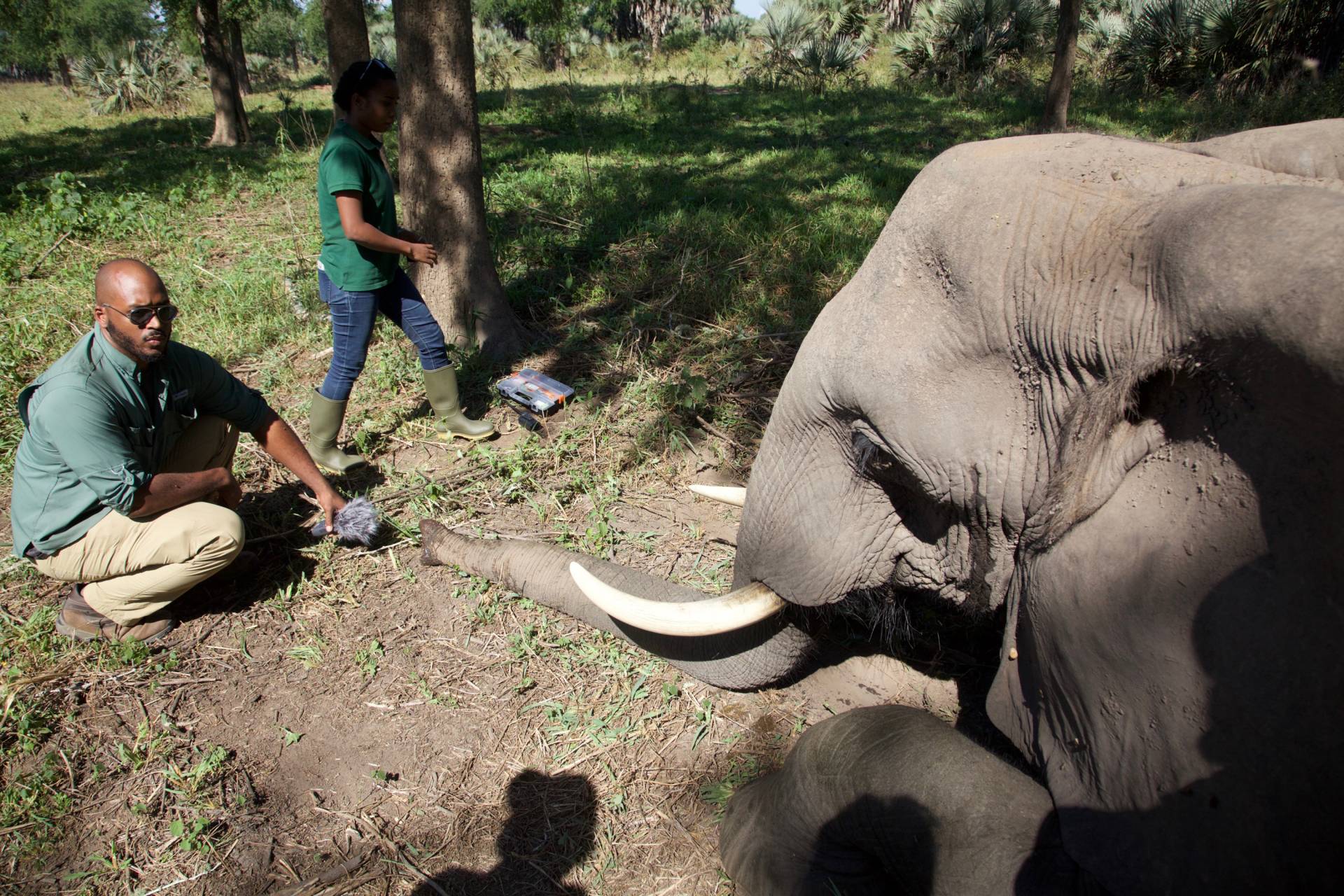
The pattern researchers investigated
A 2021 study in Science examined the effects of ivory poaching during the Mozambican Civil War, from 1977 to 1992. The researchers combined population information with genetic analysis to investigate why tusklessness had increased.
Princeton University’s explanation of the work reports that the proportion of tuskless females rose from about 18.5 percent before the war to 50.9 percent among survivors. The trait also remained more common in their female offspring than it had been before the conflict.
These figures describe a particular population and historical period. They should not be read as the percentage of all African elephants that lack tusks.
Evolution does not require an animal to decide
The elephants did not consciously stop growing tusks to avoid hunters. Tusklessness was already present as inherited variation. When poaching made tusked animals more likely to be killed, that variation affected which elephants survived and reproduced.
Over generations, a trait can become more common because the conditions favour its carriers. That is natural selection acting under a powerful human-created pressure.
A useful way to picture the process is to keep the individual and the population separate. One elephant’s body does not redesign itself in response to a headline. The composition of the surviving and reproducing population changes.
What the genetic evidence added
The research identified inheritance patterns consistent with an X-linked trait and highlighted candidate genes involved in tooth development. This connected the visible change to a biological mechanism worth investigating further.
The pattern also suggested reproductive costs, so tusklessness should not be described as a simple improvement. A trait that reduces one danger can involve disadvantages elsewhere, especially when the conditions that favoured it change.
Conservation is about restoring a population’s prospects, not celebrating poaching as a convenient way to produce “better-adapted” animals.
There was also a result in the next generation: about 33 percent of the female offspring examined were tuskless. The research team’s account identifies AMELX and MEP1a, genes involved in tooth development, as candidates associated with the trait. The inheritance pattern supported a hypothesis involving an X-linked dominant trait with a harmful effect in males. This was a proposed genetic explanation, not proof that a particular mutation had been demonstrated to kill every male embryo carrying it. The absence of observed tuskless males helped motivate that hypothesis.
The missing tusks also change the ecological question
Shane Campbell-Staton, the Princeton evolutionary biologist who co-led the study with Robert Pringle, made the possible behavioural consequences tangible:
Tusks are multi-purpose tools to strip bark from trees, dig up valuable minerals, or uncover subterranean water sources. If you don't have your tusks, your behavior shifts – you're no longer pushing trees over because you can't strip their bark.
He added: “This is an example of how human activity is changing the evolutionary trajectory of species all across the tree of life.”
This was an explanation of why tusks matter, rather than proof that every tuskless elephant behaves identically. Princeton’s 2021 account describes dietary differences investigated using DNA in fecal samples and emphasizes the need for further work. The story therefore extends from inherited variation to questions about the plants elephants eat and the landscapes they influence.
Why this story reaches beyond elephants
Human activity can alter selection pressures quickly. The Gorongosa research makes that idea concrete because the change concerns such a visible feature of a familiar animal.
For another, very different example of how a trait changes over time, see the evolutionary history of flightlessness in the Aldabra rail. Neither story is well described as evolution working toward a predetermined goal.
The hopeful part of Gorongosa’s story lies in understanding what happened and supporting conditions in which its wildlife can recover. The science does more than explain missing tusks: it reveals how deeply human choices can become written into a population’s future.
A different route into elephant conservation is the CoExistence sculpture project. Its life-sized herd invites urban audiences to think about the places that people and wildlife share.
More images

Original reporting, credits and background: ScienceAlert report.


COMMENTS