
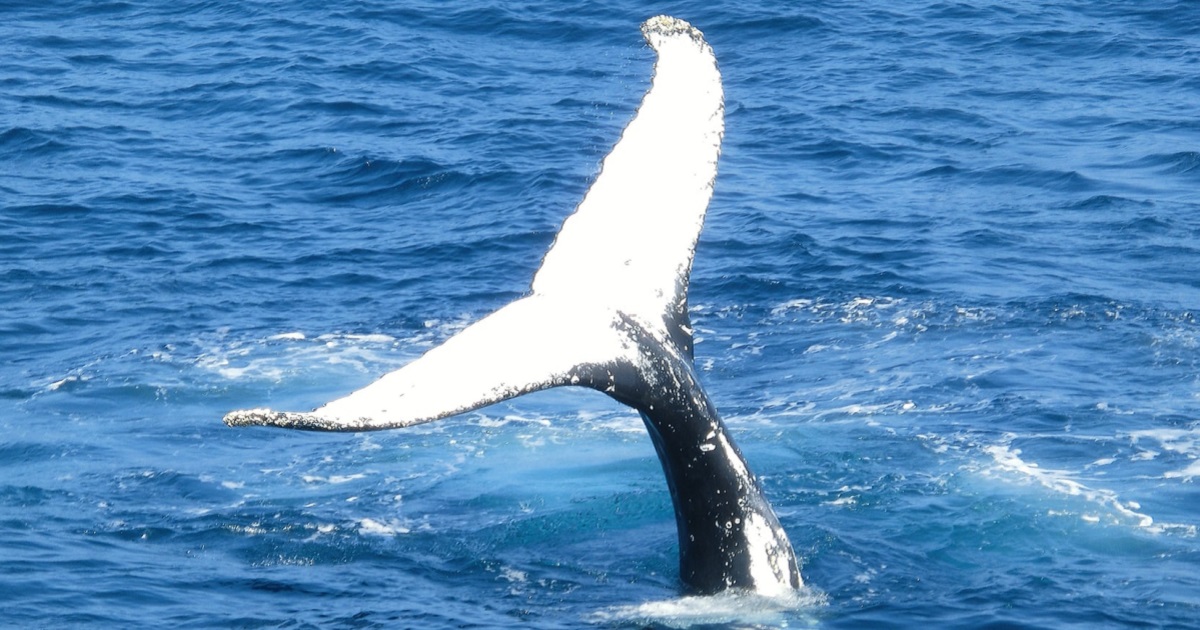
A wildlife recovery can be both encouraging and carefully measured. A 2019 study of western South Atlantic humpback whales reconstructed a population that had been reduced to only a few hundred animals by commercial exploitation, then grew substantially after protection.
From historical catches to a recovery estimate
The study in Royal Society Open Science combined catch records, abundance estimates and biological information in a population model. It estimated nearly 27,000 whales before intensive exploitation, falling to around 450 in the mid-1950s.
For the period assessed in the paper, the population was estimated at approximately 93% of its pre-exploitation size. The authors reported uncertainty ranges around those values. These are modeled estimates for a defined population, not an exact count of every whale in the ocean.
The researchers and the earlier assessment
The study was led by Alex Zerbini and included University of Washington researchers Grant Adams, John Best and André Punt. The 2020 feature emphasized their effort to combine historical catches with life-history and abundance information, rather than treating one survey as a complete reconstruction.
It also compared the result with an earlier International Whaling Commission assessment developed between 2006 and 2015. An updated assessment can use additional information and different assumptions; it should not be described simply as proving every earlier estimate wrong. The important comparison is between models, their data and their reference years. The 2019 paper supplies that context and the uncertainty around the recovery estimate.
Recovery followed changes in hunting pressure over several decades. The International Whaling Commission’s species history describes an agreement to stop hunting humpbacks from 1963, while also recording that Soviet catches continued through the 1960s despite that protection. The broader commercial-whaling moratorium was agreed in 1982 and took effect from the 1985/86 season. These milestones help explain the conservation background without implying that every whale hunt stopped at once or that protection alone measures a population’s recovery.
Why the result matters
The recovery shows what can become possible when a major pressure is reduced and enough animals survive to reproduce. It also makes the difference between a species and one of its populations worth understanding. A positive result in the western South Atlantic cannot automatically describe humpbacks elsewhere.
Recovery changes an ecosystem, too. The study considered how increasing numbers of whales could affect consumption of Antarctic krill in their feeding grounds.
How to read conservation good news
Look for the population, baseline year and method behind a percentage. Then ask what monitoring comes next. The researchers emphasized the need to follow modern threats and environmental change even as the population rebounded.
For another case where location matters, read about emperor penguin breeding failures at Halley Bay. Both stories become clearer when the headline keeps its geographical boundaries.
Sources, credits and background: Good News Network report · Royal Society research paper.


COMMENTS