
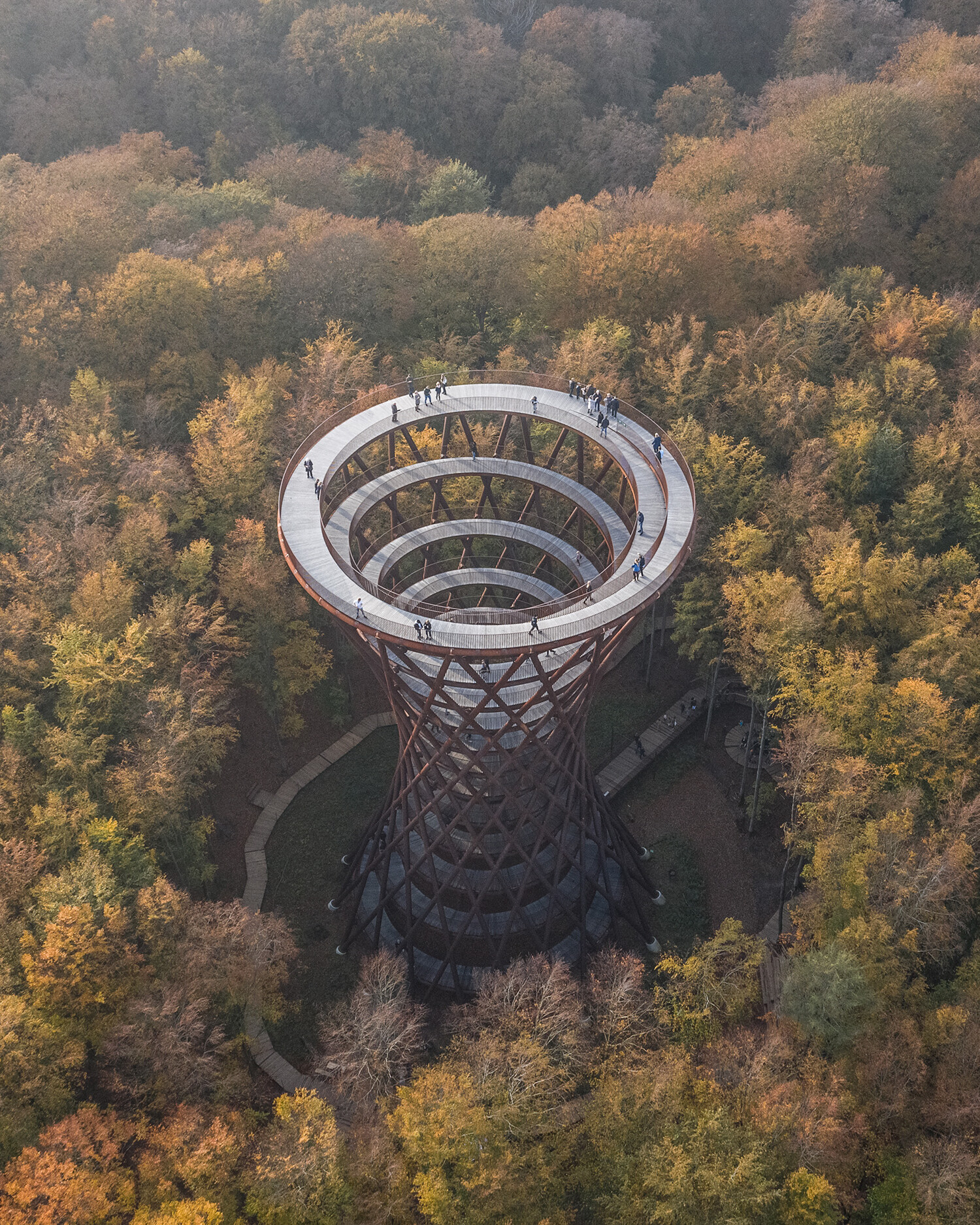
Denmark’s Forest Tower turns a climb into a continuous walk through changing views. At Camp Adventure in the Gisselfeld forests on Zealand, a spiral ramp rises inside an hourglass-shaped structure until visitors reach the landscape above the canopy. The tower is also known by its Danish name, Skovtårnet.
How tall is the Forest Tower?
The operator’s tower guide gives its height as 45 meters, with a 650-meter ramp making 12 turns. That ramp length describes the ascent inside the tower; it should not be confused with the entire forest walk. The structure combines weathering steel with oak walking surfaces.
Architect EFFEKT worked with engineers at Arup. Their account explains how the ramp’s requirements helped shape the geometry. Step-free access was part of the brief, so the path is central to the design rather than an addition hidden beside a staircase.
From concept images to a completed tower

Early images of the project circulated before it was built. Camp Adventure’s official history records the opening on March 31, 2019. The opening photograph here shows the completed structure, while the other images are architectural visualizations retained from the 2019 gallery.
Comparing the two types of image is rewarding: a visualization explains an intended relationship between ramp, trees and view, while a photograph documents a particular built scene. Both can be beautiful, but they answer different questions.

The forest route in the original design
The early EFFEKT proposal connected the tower to a longer route through the forest. Its visualizations described different experiences at ground and canopy level, with the higher route passing older trees and the lower portions relating to younger woodland. Forest-learning activities were part of that proposal’s presentation.
Camp Adventure was also described as a wider outdoor destination with an existing adventure-sports facility and zip lines. These details explain the setting surrounding the tower, while the retained renderings show design intentions. They should be read alongside the completed project and current operator information, rather than treating every feature of an early visualization as a verified present-day facility. Original visualization credit: EFFEKT Architects.
Planning the whole walk
Check the operator’s current visitor information for tickets, opening times and access details. A continuous ramp still involves distance and an ascent, so anyone with specific mobility needs should consider the complete route and available assistance before planning a visit.
For a different elevated experience, compare the tower with Gatlinburg SkyBridge. One circles upward through a structure; the other carries a suspended path across a valley. The contrast shows how the route itself can be as memorable as the view at the end.
The view from below has its own appeal. Manuelo Bececco’s forest photography uses trunks, branches and patches of sky to turn an upward glance into a structured image.
More images from the 2019 feature


Video and posts
Sources, credits and background: EFFEKT’s Forest Tower project.


COMMENTS